

What Is Kinesiology Tape? A Guide to SPORTTAPE and How It’s Used
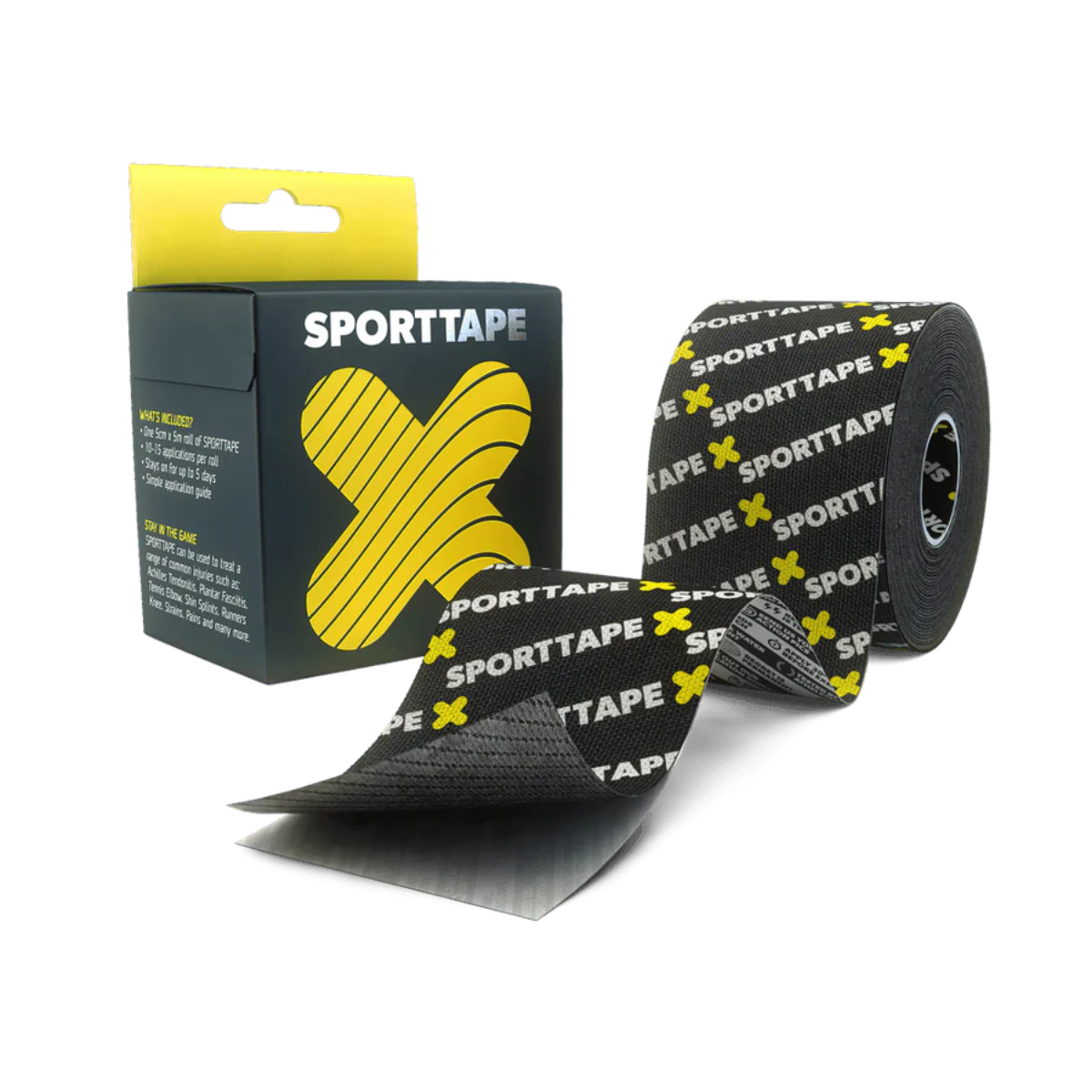
Watch runners, football players, or athletes during intense training and you will often notice brightly coloured tape across their knees, calves, ankles, or shoulders. This is Kinesiology Tape, a flexible sports tape commonly used in sports and physiotherapy.
What sets Kinesiology Tape apart from conventional sports tape is its elasticity. Instead of holding an area rigidly in place, it is designed to stretch with the body, allowing it to be worn while running, training, and competing.
This combination of support and freedom of movement is why Kinesiology Tape has become a familiar part of both sports and physiotherapy.
What Is Kinesiology Tape?
Kinesiology Tape is an elastic adhesive tape applied to the skin around muscles and joints. Common application areas include the knees, calves, thighs, ankles, shoulders, back, arms, and wrists.
Unlike rigid sports tape, which is generally used to provide firmer support and restrict movement, Kinesiology Tape stretches with the body. This makes it particularly suited to areas that need to keep moving during activity.
SPORTTAPE describes this concept as providing flexible support for muscles and joints without making movement feel restricted.
How Does Kinesiology Tape Work?
Think about your knee while running. Every time it bends and straightens, the skin and underlying structures are constantly moving. A non-elastic tape would naturally restrict some of that movement.
Kinesiology Tape takes a different approach. Its elastic construction allows it to stretch and recoil as the body moves, providing support to the taped area while allowing the wearer to continue running, bending the knee, raising an arm, or performing other movements.
This is also why there is no single application technique for every situation. The direction of the tape, its shape, and the amount of stretch used can vary depending on the area and purpose.
In other words, how you apply Kinesiology Tape matters just as much as which tape you choose.
Getting to Know SPORTTAPE Kinesiology Tape
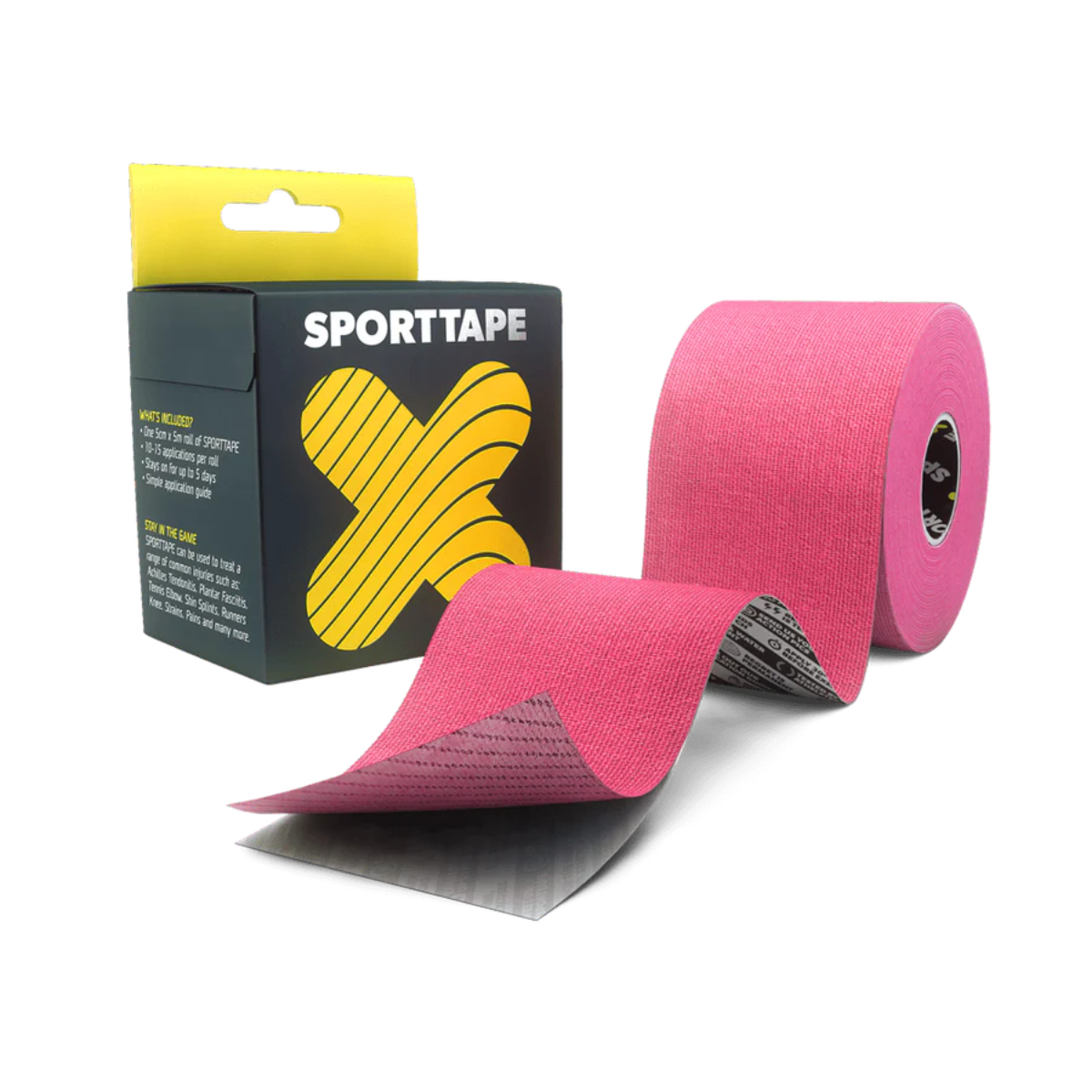
SPORTTAPE Kinesiology Tape is developed by SPORTTAPE, a UK sports taping brand, for use across sport and physiotherapy.
The tape is made from 96% cotton and 4% spandex and, according to SPORTTAPE, offers up to approximately 180% stretch. This elasticity allows the tape to move with different parts of the body during activity.
Adhesion is equally important. Sports tape has to cope with movement and sweat for extended periods, so SPORTTAPE uses an acrylic adhesive alongside water- and sweat-resistant properties. The tape is also latex-free.
SPORTTAPE Kinesiology Tape Specifications
Material: 96% Cotton / 4% Spandex
Stretch: Up to approximately 180%
Adhesive: Acrylic Adhesive
Latex-Free: Yes
Waterproof: Yes
Sweat Resistant: Yes
Weather Resistant: Yes
Standard Size: 5 cm × 5 m
Wear Time: Up to approximately 5 days, with SPORTTAPE recommending reapplication around every 2 days
These details matter in practice. Kinesiology Tape is rarely worn while the body is completely still; it needs to cope with repeated movement, sweat, and changing conditions throughout training or exercise.
What Should You Look for in a Good Kinesiology Tape?
Colour and price may be the first things you notice, but three characteristics have a much greater impact on how Kinesiology Tape performs in use: stretch, adhesion, and fabric quality.
The tape should stretch comfortably with the body without unnecessarily interfering with movement. At the same time, the adhesive needs to maintain contact with the skin during activity, while the fabric needs to cope with repeated movement.
For runners and athletes who wear tape during training or competition, sweat and water resistance become particularly relevant. Even a correctly applied tape cannot perform as intended if it begins peeling away halfway through an activity.
SPORTTAPE Kinesiology Tape brings these elements together through its elastic fabric, acrylic adhesive, and water- and sweat-resistant construction.
Who Uses Kinesiology Tape?
Although Kinesiology Tape is closely associated with athletes, it is not limited to professional sport.
Runners and marathoners commonly use tape around areas such as the knees, calves, thighs, and ankles, while sports involving more varied movements—including football, functional fitness, and HYROX—may involve taping different areas depending on the activity.
Kinesiology Tape is also used in physiotherapy, where the application method, direction, and amount of stretch can be adapted according to the intended purpose.
The more useful question, therefore, is not simply “Where should I apply the tape?” but “What am I applying it for?” The purpose of taping influences the way the tape should be applied.
How to Make Kinesiology Tape Stay on Longer
Even a high-quality tape may peel earlier than expected if the skin is not prepared properly.
Before application, make sure the skin is clean and completely dry. Avoid applying tape over lotion, oil, or sweat, as these can reduce adhesion.
It is also useful to round the corners of the tape rather than leaving sharp square edges. Rounded corners are less likely to catch on clothing and begin peeling. Once applied, gently rubbing the tape can help activate the acrylic adhesive and improve contact with the skin. Avoid applying excessive stretch to the ends of the tape.
Most importantly, different areas of the body require different taping approaches. Taping a knee is not the same as taping a calf, and a shoulder application will differ from an ankle application.
Choosing a good Kinesiology Tape is therefore only part of the equation. The tape also needs to be chosen for the right purpose and applied in the right way—because small details in application can make a meaningful difference in real-world use.