
When we get a wound, the first thing that often comes to mind is a “plaster.” But there are actually many more types of wound dressings available, including gauze, absorbent pads, film dressings, hydrocolloids, hydrogels, foams, and materials designed specifically to secure a dressing in place. Each serves a different purpose, and no single type is suitable for every wound.
This article walks through the main types of wound dressings in a simple way: what each one does, which wounds it may suit, and what to consider before choosing one. The idea is to look beyond labels such as “extra sticky” or “waterproof” and choose based on what the wound actually needs.
Before choosing a dressing, look at the wound first
For small and superficial wounds such as minor grazes or cuts, the first step is to stop the bleeding and clean the wound. If it is bleeding, apply pressure with clean gauze or cloth until the bleeding stops, then gently rinse away dirt with clean water. There is no need to scrub the wound surface aggressively.
Current approaches to minor wound care focus on maintaining an appropriately moist healing environment and protecting the wound from reopening, rather than simply trying to dry it out and form a scab as quickly as possible. (Read more)
Once the wound is clean, consider four things: how large it is, how much exudate or wound fluid it produces, whether it is in an area exposed to water or friction, and whether the surrounding skin is strong or easily irritated.
These factors can help guide the choice of dressing.
What types of wound dressings are there?
For everyday use, they can broadly be grouped into four categories.
1. Ready-to-use adhesive plasters
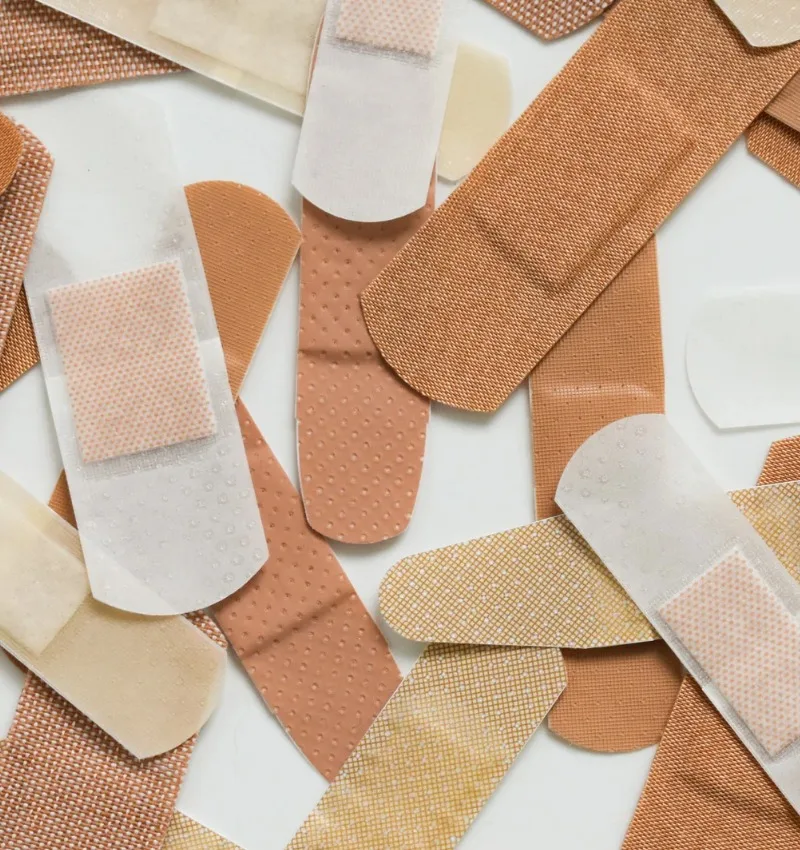
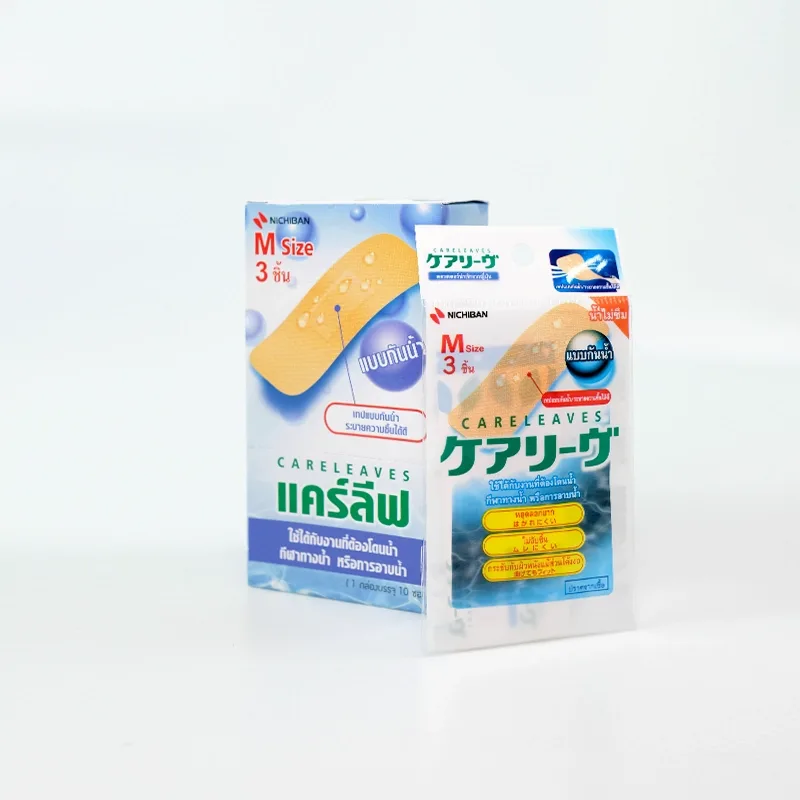
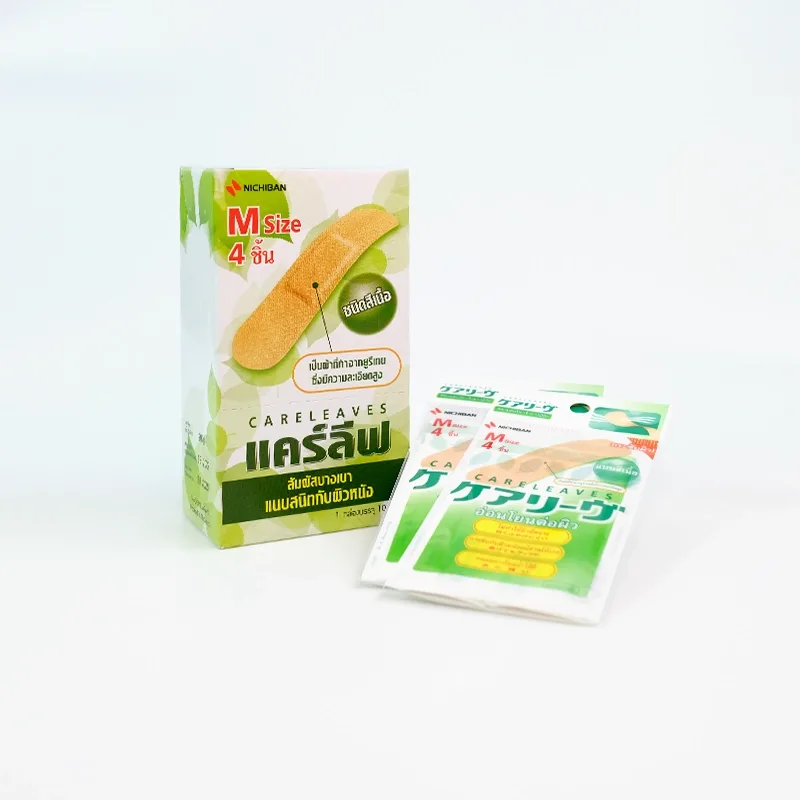
These are the familiar small plasters with an absorbent pad in the centre and adhesive around the edges. They are suitable for small wounds such as minor cuts, small grazes, or wounds with only a small amount of blood or exudate.
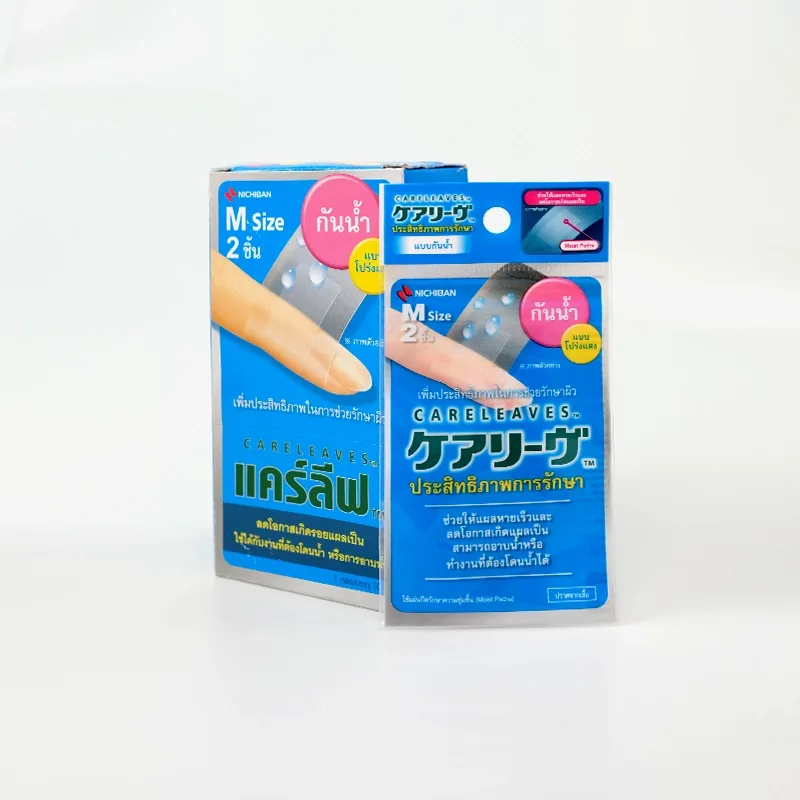
Plasters also come in different materials, including fabric, plastic, and water-resistant versions. These differ in flexibility, breathability, water resistance, and the type of adhesive used against the skin.
For a small wound where convenience matters, a ready-to-use plaster is often the simplest choice.
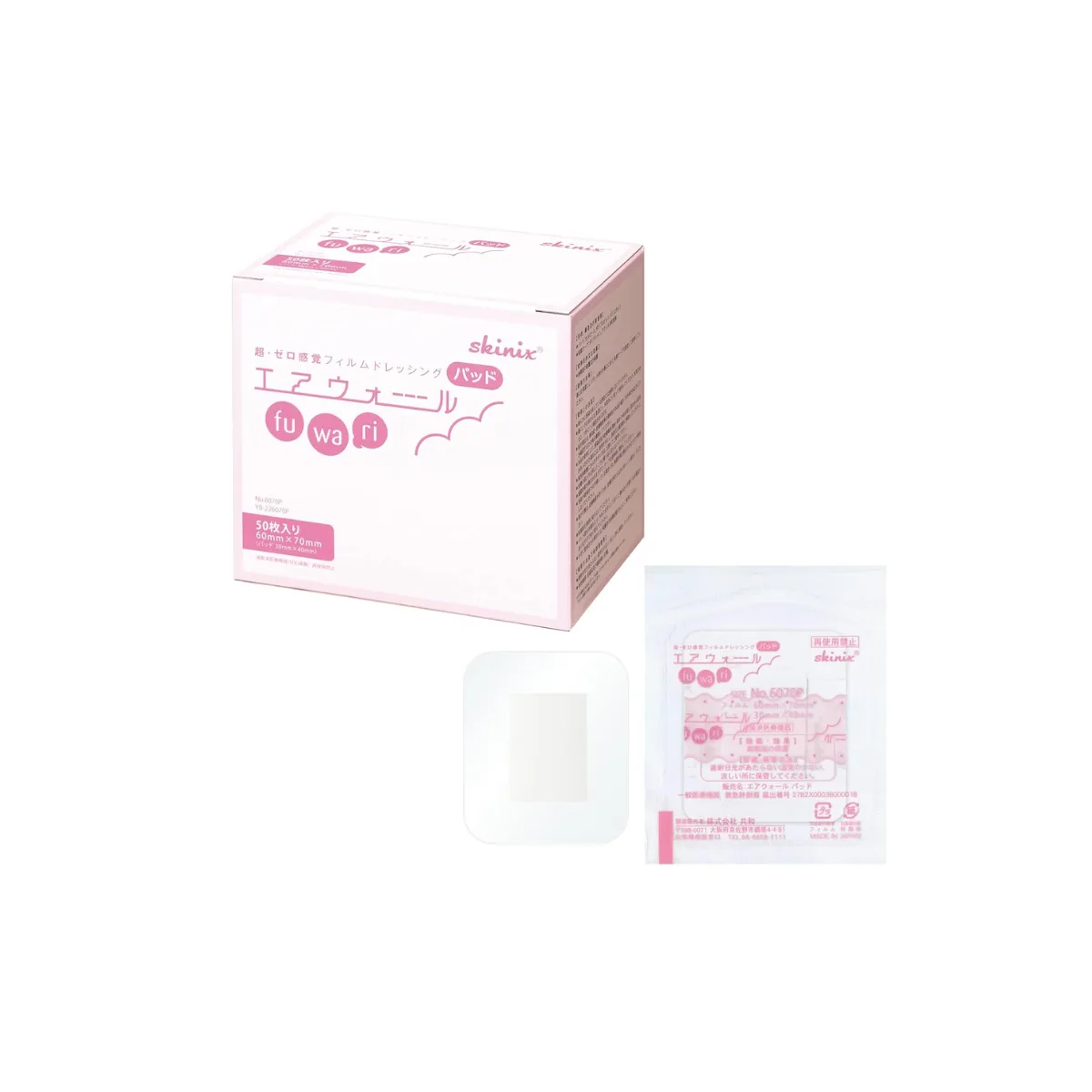
2. Film dressings with an absorbent pad
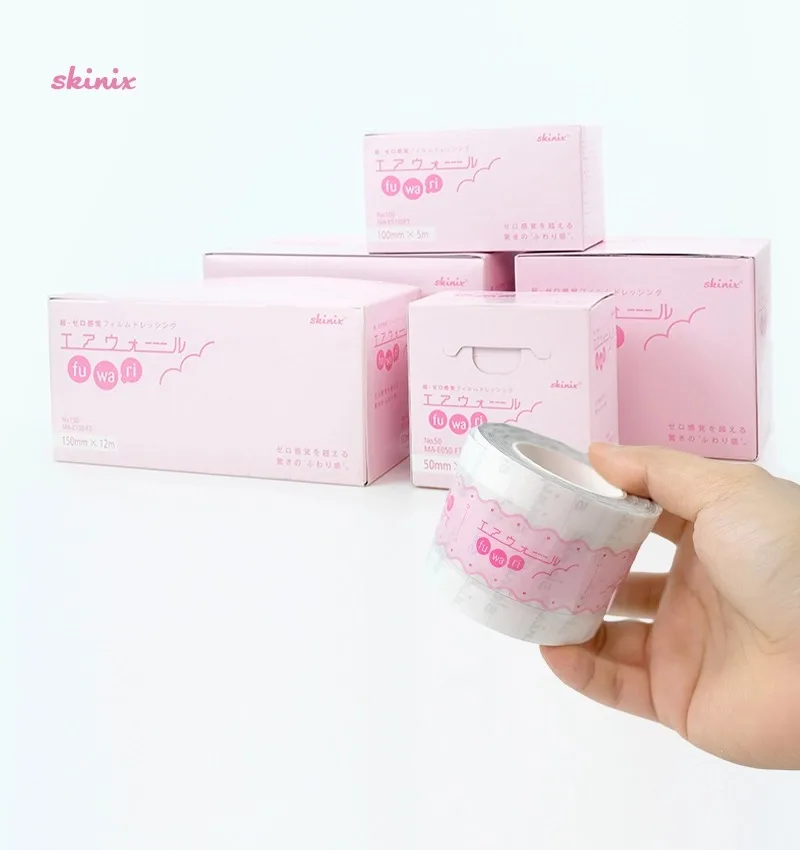
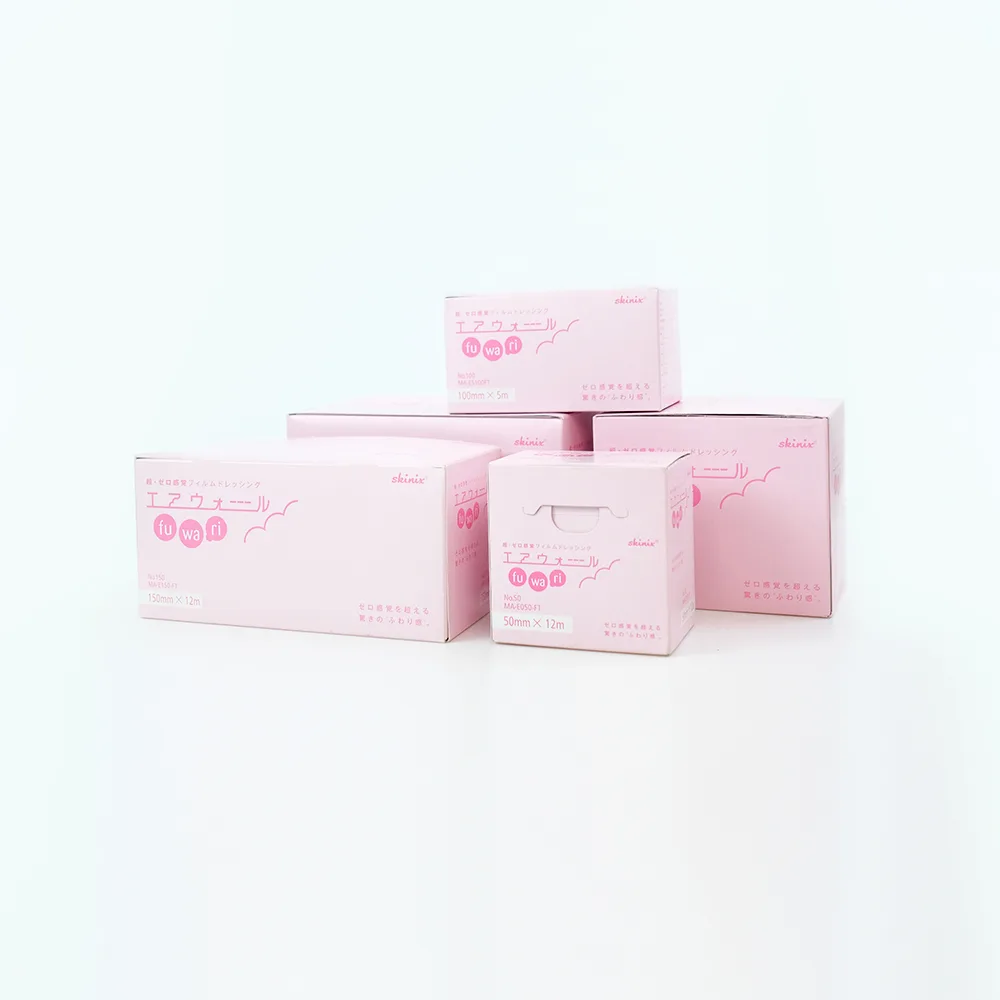
These have an absorbent pad in the centre, much like a conventional plaster, but use a thin film border to hold the dressing in place. They are also often available in larger sizes.
They may be useful for wounds that need a larger covered area, such as certain superficial wounds, some post-procedure wounds, or wounds that still produce some fluid that needs to be absorbed.
Their advantage is convenience: the absorbent layer and outer protective layer come together in one dressing. The thin film can also conform well to areas of the body that move.
3. Adhesive materials for securing dressings
This group does not have an absorbent pad in the centre. Its main purpose is to hold a dressing or absorbent material in place.
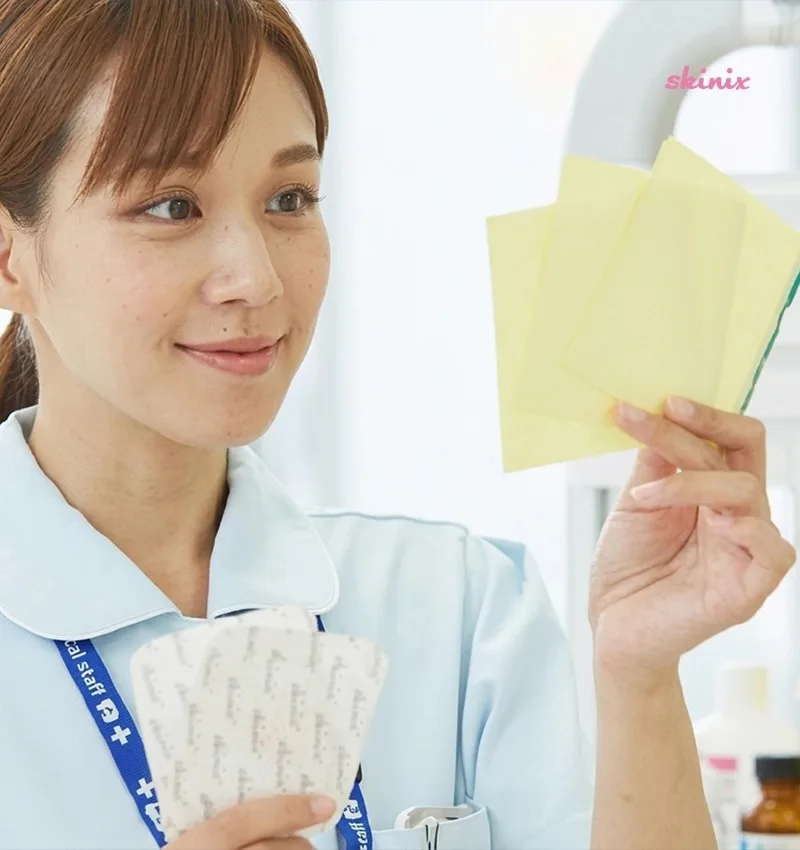
These materials may come as thin films or fabric/non-woven sheets. Their advantage is that you can choose the wound-contact material separately, then cut the outer adhesive layer to fit the size and location of the wound.
For example, if a wound is larger than a standard plaster, you might first choose an absorbent pad suited to the amount of exudate, then secure it with a film or adhesive fixation sheet. (Read more about wound dressings)
Reactions to plasters and film dressings can come from adhesives and other components
Medical adhesives are not all the same. Different types provide different levels of adhesion, skin gentleness, and comfort during removal.
Acrylic / Acrylate Adhesives
These are commonly used in medical tapes and film dressings because they adhere well and are relatively durable. Some people, however, may develop irritation or allergic contact dermatitis, particularly when the same area is exposed repeatedly.Rubber-based Adhesives
These can also provide strong adhesion, but people who are sensitive to rubber or certain compounds used in the adhesive may experience irritation or an allergic reaction. Anyone with a history of reacting to tapes or plasters should pay attention to how their skin responds.Soft Silicone Adhesives
These are designed with gentler removal in mind. They can adhere to the skin while causing less pulling during removal, which may make them useful for fragile skin, older adults, children, or areas where dressings need to be changed frequently. (Read more about silicone dressings)
If a product repeatedly causes redness, itching, burning, a rash, or small blisters along the adhesive area, it is best to stop using that product. The reaction may come not only from the adhesive itself, but also from rubber, preservatives, or other ingredients in the dressing. (Read more)
At Merry’s Care, we do not think the best adhesive is necessarily the strongest one. It should hold well enough for the job and come off without creating a new problem for the skin around the wound.
4. Wound-contact and absorbent materials
There is much more in this category than ordinary gauze, and the choice should depend on the condition of the wound.
Sterile Gauze
Sterile gauze is widely used, affordable, and useful for absorbing blood and exudate or as part of a layered dressing.
It can work well for small wounds that need absorption, or as a secondary dressing over another wound-contact material. Gauze is also used for packing certain types of wounds under appropriate clinical care.
One limitation is that ordinary gauze can dry and stick to the wound surface. Removing it may disturb newly forming tissue, making it less suitable for superficial wounds that are actively re-epithelialising or where minimising trauma during dressing changes is important. (Read more)
Non-adherent Pads
These are suitable for superficial wounds that still need an absorbent layer but where sticking to the wound surface is undesirable, such as grazes, certain superficial skin wounds, or wounds that require frequent dressing changes.
The wound-contact surface is designed to stick less to newly forming tissue, helping reduce discomfort and disturbance during removal.
Foam Dressings
Foam dressings are designed for absorption and may be useful for wounds with moderate to high levels of exudate. The foam can also provide some cushioning against pressure and friction.
Some foam dressings come with an adhesive border, while others require a separate fixation layer. (Read more)
Hydrocolloid Dressings
When hydrocolloid comes into contact with wound fluid, it absorbs the fluid and forms a gel, helping maintain a moist wound environment. It is commonly used for wounds with low to moderate exudate.
Many versions are self-adhesive and convenient to use, but hydrocolloids are not suitable for every wound, particularly when close monitoring for infection is required. (Read more)
Hydrogel
Hydrogel works differently from an absorbent dressing because its main role is to provide moisture.
It can be useful for dry wounds or wounds containing dry tissue that need additional moisture to create a more suitable wound environment.
Some hydrogels need another dressing over the top and are not intended as the main choice for wounds producing large amounts of fluid. (Read more)
Alginate
Alginate dressings are highly absorbent and are suitable for wounds producing larger amounts of exudate. When they come into contact with wound fluid, they form a gel that helps manage moisture.
For dry wounds or wounds producing very little exudate, alginate may not be suitable because the material can dry out and adhere to the wound surface. (Read more)
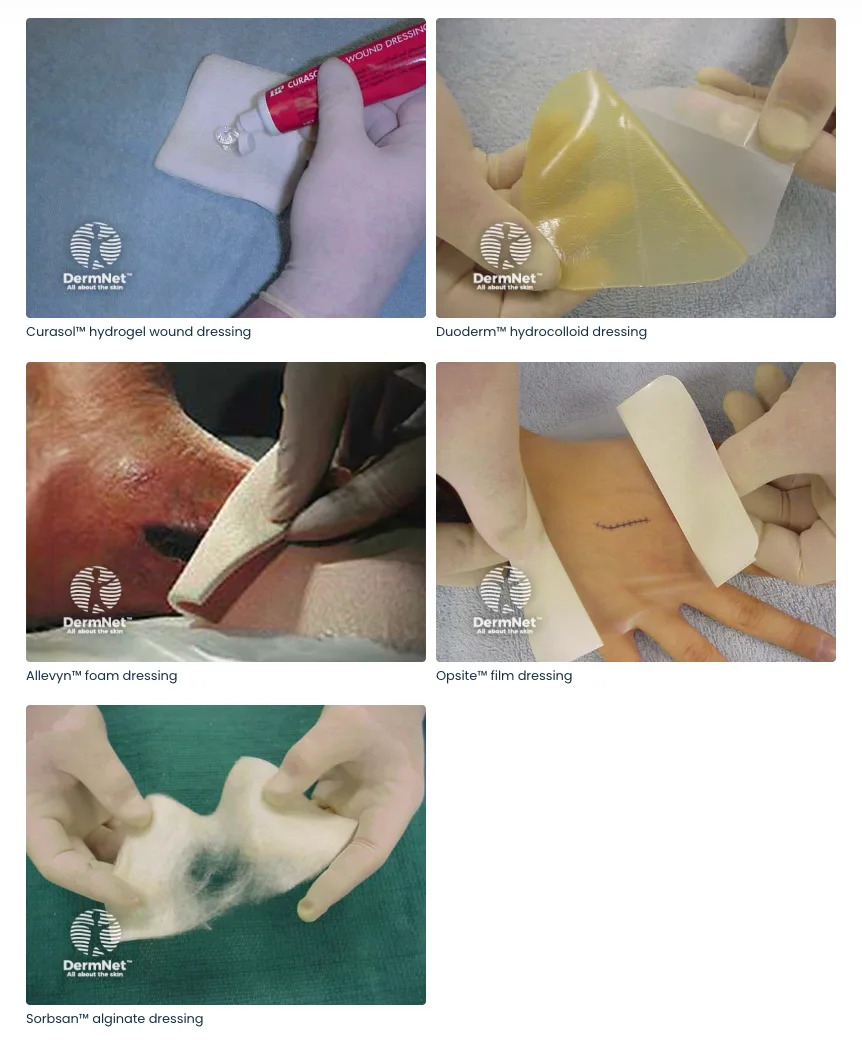
Source : Wound dressings
This shows why “covering a wound” does not always involve one single product. A dressing system may consist of a wound-contact layer + an absorbent layer + an outer fixation or protective layer, depending on what the wound needs.
Which dressing should you use for which wound?
For a small, clean cut, minor graze, or superficial wound with little exudate, a ready-to-use plaster may be enough.
If the wound is larger but still superficial, you may choose a film dressing with an integrated absorbent pad, or select an absorbent material separately and secure it with a fixation film or adhesive sheet. The second option offers more flexibility in choosing both the absorbent material and the size of the covered area.
If the wound produces more exudate, absorbency becomes more important than whether the outer layer is waterproof. A non-adherent pad, foam, or another more absorbent dressing may be needed. For wounds with heavier exudate, alginate may become more relevant.
If the wound is very dry, the goal may be the opposite. Instead of removing more moisture, a dressing such as hydrogel may be used to provide or maintain moisture.
No single dressing is suitable for every wound, and the dressing that works well at the beginning of healing may not remain the best choice a week later. (Read more)
The location of the wound matters too
Wounds on fingers, knees, ankles, or joints experience more movement and tension than wounds on flatter areas, so flexibility and secure fixation become more important.
If the wound is in an area frequently exposed to water or sweat, consider how well the outer layer protects against moisture. For people with fragile skin, children, older adults, or anyone who needs frequent dressing changes, removal matters too—not just how firmly the dressing sticks.
Wound care is not only about the wound itself. The surrounding skin is part of the picture as well.
Four things to consider before choosing a wound dressing
You do not need to memorise the name of every type of dressing. Start by asking four questions: How large is the wound? How much exudate is there? Is the wound too dry or too moist? And where is it located?
From there, you can decide whether you need a small ready-to-use plaster, a more absorbent pad, a material that provides moisture, or a film or adhesive layer to hold the dressing securely in place.
Many small and superficial wounds can be managed at home, but medical assessment is more appropriate if the wound is deep or gaping, continues to bleed heavily despite pressure, contains an embedded foreign object, causes numbness or abnormal movement nearby, or results from a human or animal bite.
Increasing redness, swelling, warmth, pain, pus, or fever may indicate infection. People with diabetes should also be particularly cautious with wounds on the feet, as these require more careful assessment than an ordinary minor wound.
At Merry’s Care, we do not think there is one “best” wound dressing for every situation. What matters more is matching the dressing to the wound—and remembering the skin around it too.
Merry’s Care carries different types of wound-care materials, from ready-to-use plasters and absorbent materials to films and fixation dressings for different needs. In the next article, we will look more closely at each group and how to choose from the options available in real-life use.